You're reading NOXEN — the intelligence newsletter for the next generation of wealth, power and ambition. Every week we decode what's really moving the world. No jargon. No noise. Just the intelligence that matters.

The AI Gold Rush — Who's Getting Rich, Who's Getting Left Behind
OpenAI just filed for an IPO targeting over $1 trillion. Anthropic hit a $965 billion valuation in May 2026. The window is opening — and the people who understand what's happening right now are going to make extraordinary returns.
We are in the middle of the biggest wealth creation event since the internet.
The dot-com boom of the late 1990s minted a generation of billionaires. The people who got in early on Google, Amazon, and Facebook became some of the wealthiest humans alive. The people who watched from the sidelines read about it in the newspaper.
History is repeating. Right now, today, a new class of companies is being built — and their valuations are already staggering. The question isn't whether AI is going to change everything. It already is. The question is: who is going to profit from it, and are you positioned to benefit?
The Companies
The Private Giants — And What They're Worth Right Now

The infrastructure behind AI — data centres, chips, compute — is already worth trillions. The applications on top are just getting started.
Before we talk about IPOs, let's look at what's already been built — entirely out of public view, in private markets that most people never get access to.
Look at that table carefully. Every company except NVIDIA is private — meaning ordinary investors cannot buy a single share. The wealth being created right now is happening almost entirely in a market most people don't even know exists.
Sam Altman, CEO of OpenAI, is worth an estimated $3 billion — built entirely from outside investments in companies like Stripe, Reddit and Helion, not from OpenAI equity (he holds none). The early employees and investors who backed OpenAI when it was a nonprofit research lab in 2015 are sitting on life-changing returns already, with the biggest gains still ahead of them.
The Chip That Runs Everything
NVIDIA: The Company That Already Made History
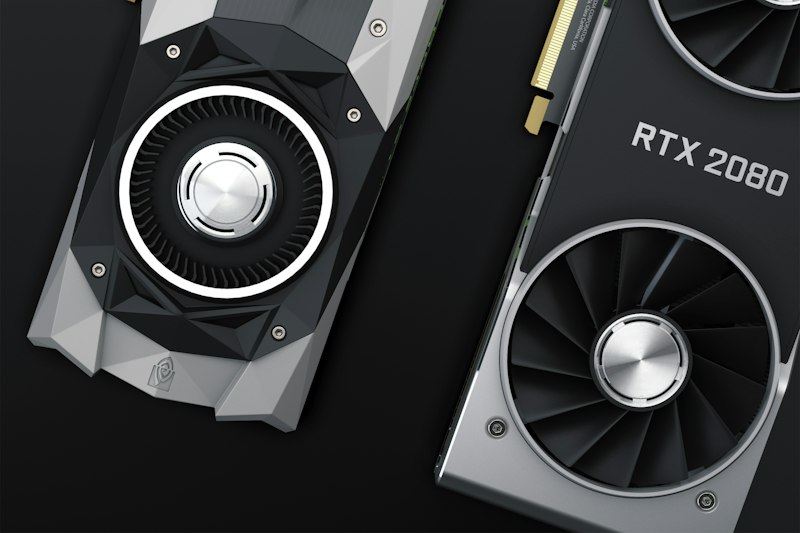
NVIDIA's H100 chips — the most sought-after piece of hardware on the planet. Tech companies are queuing for months to get them.
Before we look at what's coming, it's worth pausing on what's already happened.
Jensen Huang founded NVIDIA in 1993. For most of its life, it was a gaming chip company. Then AI happened — and NVIDIA's GPUs turned out to be exactly the hardware that AI models need to train and run.
If you had put £10,000 into NVIDIA in January 2023, you would have had over £90,000 by the end of 2024. That's not a crypto gamble or a meme stock. That's a 30-year-old company that makes physical chips — and the people who understood why it mattered made generational returns.
Jensen Huang's stake in NVIDIA is now worth over $178 billion (as of mid-2026). He built a gaming chip company in a garage. He's now one of the ten wealthiest people alive.
The NVIDIA story is what happens when infrastructure becomes critical. Every AI company in the world needs their chips. That's a monopoly on picks and shovels during a gold rush — the most reliable way to get rich in any boom. The question now is: what is the next NVIDIA?
The IPOs
The Flood of Public Listings Coming — And Why It Matters to You

When these companies finally go public, it will be one of the most significant IPO windows since the 2010s Facebook and Google listings.
Here is the thing about private valuations: they're only numbers on paper until a company goes public. The IPO is when the ordinary investor finally gets access — and historically, that's when the biggest single-day and single-year gains happen.
Consider what happened when previous tech giants went public:
The people who bought Google at its IPO and held have turned every £1,000 into over £35,000. The people who bought Amazon in 1997 and never sold are multi-millionaires — though it required patience through the dot-com crash, where Amazon's stock fell over 90% before recovering. None of these early investors were hedge funds or institutions — they were people who recognised what was happening and acted.
OpenAI filed confidentially with the SEC for an IPO in June 2026, targeting a valuation exceeding $1 trillion. Sam Altman had said for years the company needed to remain mission-focused — but at $852 billion and growing, with Microsoft as a major investor, the commercial pressure became impossible to ignore.
Dario Amodei and his sister Daniela Amodei built Anthropic after leaving OpenAI. In May 2026, Anthropic raised $65 billion in a Series H round, reaching a $965 billion valuation — and is now itself approaching a $1 trillion listing. The race to go public is on.
The Real Play
What Smart Investors Are Doing Right Now
You can't buy OpenAI today. But you can position yourself intelligently.
The people who made extraordinary returns from the internet boom weren't all early employees at Google. Many of them simply understood the shift that was happening and bought the picks-and-shovels companies — the infrastructure, the platforms, the companies that would benefit regardless of which AI model eventually won.
Satya Nadella at Microsoft, Sundar Pichai at Google, and Andy Jassy at Amazon all placed enormous bets on AI infrastructure before it was mainstream. Their companies are now worth more than they've ever been.
The publicly available plays right now — the companies ordinary investors can actually buy — include the chip makers (NVIDIA, AMD), the cloud providers (Microsoft Azure, Amazon AWS, Google Cloud), and the companies building enterprise AI tools on top of the models.
You don't need to pick the winner in the AI model race. You need to understand that AI requires chips, cloud compute, data infrastructure, and electricity — and the companies that provide those things will benefit regardless of whether OpenAI or Anthropic or xAI comes out on top. That's the intelligent play. And when the IPOs start arriving, you'll know exactly what you're looking at — because you understood the landscape before the headlines told you to.
Microsoft has invested over $13 billion in OpenAI and has preferential rights to deploy its models through Azure, making Microsoft the primary cloud partner — though OpenAI also sells directly to enterprises and consumers via ChatGPT and its own API. Their Azure cloud revenue grew 33% in Q3 2024 — with AI services contributing approximately a third of that growth, and accelerating. The market already knows. The question is whether you're positioned.
Sam Altman is quietly becoming one of the most powerful people in the world. Not just through OpenAI — he's also leading the Stargate project — a $500 billion AI infrastructure initiative backed by SoftBank, Oracle and the US government to build data centres and AI infrastructure across America ($100 billion committed immediately). He is building the infrastructure of the next economy.
Elon Musk's xAI — built around the Grok chatbot and integrated with X (Twitter) — raised at a $250 billion valuation in January 2026. Musk is the only person with a direct pipeline to 600 million Twitter users as a distribution channel for his AI product. Don't underestimate that advantage.
AI data centres are projected to consume 8% of all US electricity by 2030. That makes energy infrastructure — grid operators, nuclear plant operators, renewable energy providers — one of the quietest but most significant AI investment plays available right now.
The Bottom Line
The AI boom is not hype. It is a genuine technological shift on the scale of the internet — and like the internet, most people will understand it after the biggest gains have already been made.
The companies being built right now are going to define the next two decades of wealth creation. The IPOs are coming. The question is whether you understand what you're looking at when they arrive.
NOXEN will be watching every move — and breaking it down for you every week.
See you next week,
— The NOXEN Team
Test Yourself
How much did you take in?
Two levels of ten. Elementary checks you read it. Advanced checks you understood it.