You're reading NOXEN — the intelligence newsletter for the next generation of wealth, power and ambition. Every week we decode what's really moving the world. No jargon. No noise. Just the intelligence that matters.
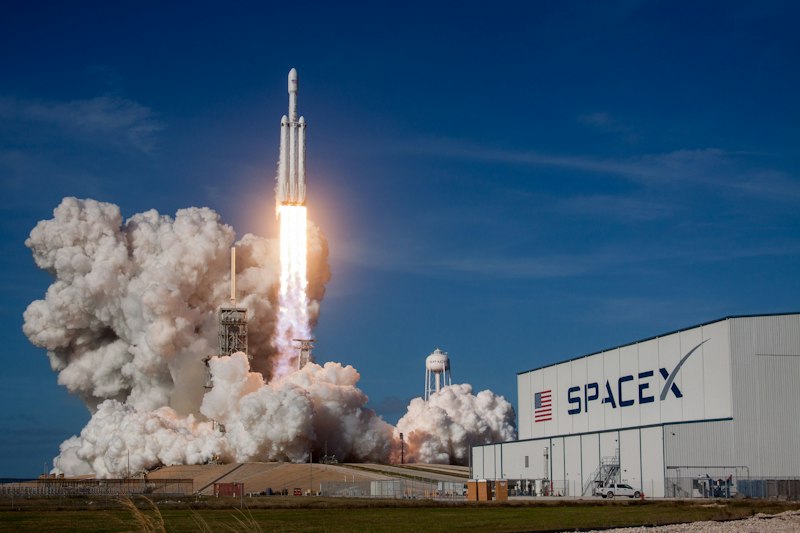
SpaceX: How the Biggest IPO in History Was Built
Elon Musk built a rocket company from nothing — and nearly went bankrupt three times doing it. In June 2026, SpaceX went public at a $2 trillion valuation — the largest IPO in history. This is how it happened.
In 2008, SpaceX had enough money left for one more rocket launch.
If that launch failed, the company was finished. Elon Musk had already invested roughly $100 million of his PayPal payout into SpaceX — with the rest going into Tesla — and the rocket company had failed three times in a row. His marriage had collapsed. His net worth was essentially zero. He was borrowing money from friends to pay his rent.
The fourth launch succeeded. The rocket reached orbit. SpaceX survived.
That fourth launch didn't just save a company. It started one of the most extraordinary wealth creation stories in modern history — a story that reached its defining chapter in June 2026 when SpaceX went public on Nasdaq as the largest IPO in history.
How It Was Built
From a Garage Dream to the Most Valuable Private Company on Earth
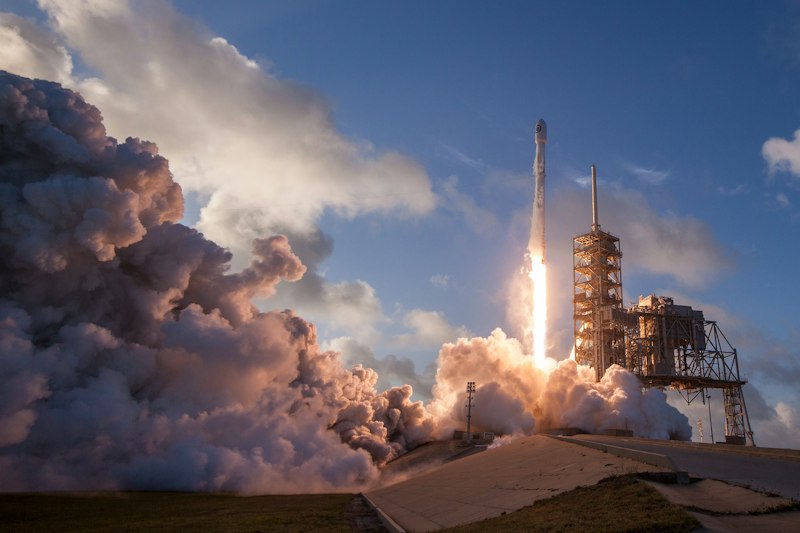
The Falcon 9 rocket — the workhorse that made SpaceX the dominant force in global launch services. It lands itself back on a drone ship in the middle of the ocean.
To understand why the SpaceX IPO would be so significant, you have to understand what SpaceX actually built — because most people still think of it as "Elon's rocket hobby." It is not.
Musk founds SpaceX with $100M of his own money. NASA contracts are dominated by Boeing, Lockheed Martin, and their joint venture ULA, alongside contractors like Orbital Sciences and Northrop Grumman. SpaceX is not taken seriously by anyone in the industry.
Three failed launches. Company nearly bankrupt. Fourth launch succeeds. NASA awards a $1.6 billion contract — the contract that saved the company's life.
SpaceX lands an orbital-class rocket for the first time in history. What was considered physically impossible — a full-scale orbital rocket that lands itself and can be relaunched — is demonstrated on live television. The launch cost model for the entire industry changes overnight.
SpaceX becomes the first private company to send humans to the International Space Station. NASA — which had been paying Russia approximately $90 million per seat — now pays SpaceX. America's entire human spaceflight capability runs through one private company.
SpaceX completes 134 orbital launches in a single year — more than any country or company in history, and more than the rest of the world combined. Starlink surpasses 4.6 million subscribers. Valuation hits $350 billion by end of year.
This is not a vanity project. SpaceX now controls over 80% of the global commercial launch market. NASA, the US military, the European Space Agency, commercial satellite operators — they all rely on SpaceX infrastructure. The US government's national security launch contracts alone are worth billions annually.
The Real Money
Starlink: The Business Inside the Business That Changes Everything

Starlink's constellation of over 6,000 satellites provides broadband internet to over 160 countries. It is the fastest-growing internet provider in the world.
When most people think about SpaceX, they think about rockets. But the financial case for a SpaceX IPO is built almost entirely on one product: Starlink.
Starlink is a satellite internet service. SpaceX launches thousands of small satellites into low Earth orbit and uses them to beam broadband internet to anywhere on the planet — ships, planes, remote villages, conflict zones, Antarctic research stations. If you have a clear view of the sky, you can have high-speed internet.
The comparison that Wall Street makes is to Amazon Web Services. AWS started as an internal tool at Amazon — a side project, almost. It is now the most profitable division of Amazon by far, worth more than the entire retail business that made Amazon famous.
Starlink could be SpaceX's AWS. A subscription internet business with over 10 million paying customers, growing fast, in a market where the competition is physical cable — which can't reach a boat in the middle of the Pacific or a farm in rural Africa.
Morgan Stanley analysts have valued Starlink alone — separate from the rocket launch business — at up to $500 billion as a standalone business. The rocket business on top of that is the bonus.
Starlink is not "internet from space." It is a recurring revenue subscription business with almost no geographic limits, a network effect that gets stronger with every subscriber added, and a cost advantage over competitors that is nearly impossible to replicate — because you need a rocket company to do it. SpaceX was uniquely positioned to build this cheaply and at scale — reusable rockets slashed the cost of deploying thousands of satellites to a level no competitor could match. That's the moat.
The IPO
SpaceX Went Public in June 2026 — The Largest IPO in History

SpaceX's June 2026 listing on Nasdaq was one of the most significant market events of the decade — eclipsing even Alibaba's 2014 IPO in size and impact.
On June 12, 2026, SpaceX listed on Nasdaq under the ticker SPCX. Shares closed their first day above $161, giving the company a market cap above $2 trillion. It was the largest IPO in history.
For years there had been speculation that Starlink might list separately before or instead of the full company. In the end, SpaceX went public as a whole — giving investors exposure to both the subscription internet business and the rocket and defence contracts that Musk had long guarded closely.
The numbers are staggering. Here's SpaceX's valuation in context:
SpaceX at its current $2 trillion+ valuation is worth more than Boeing, Airbus, and Lockheed Martin — the three companies that dominated aerospace for most of the 20th century — combined many times over. And as of June 2026, ordinary investors can finally buy a piece of it.
The early investors who got in before the public will have made extraordinary returns. Peter Thiel's Founders Fund was an early backer. Google invested $900 million in 2015 when the valuation was a fraction of today's. Fidelity, Baillie Gifford, and a handful of sovereign wealth funds also hold stakes that are now worth billions on paper.
The Bigger Picture
Starship, Mars, and the Long Game Nobody Is Talking About
Everything above — the launches, Starlink, the IPO — is the short-term story. The long-term story is bigger, stranger, and potentially more valuable than anything currently priced into that $2 trillion post-IPO valuation.
SpaceX is building Starship — the largest rocket ever constructed, designed to carry 100 people to Mars. Musk has said, repeatedly and seriously, that his goal is to make humanity a multi-planetary species. That is not marketing. He structured SpaceX as a private company specifically so that short-term shareholders couldn't pressure him to abandon it.
Starship's commercial applications — carrying satellites, space tourism, point-to-point travel on Earth (New York to London in 30 minutes) — represent revenue streams that don't exist yet but could dwarf everything SpaceX currently makes.
SpaceX has already blown past the targets analysts once thought were a decade away. In 2008, when Musk was borrowing money to pay rent, the idea that SpaceX would be worth over $2 trillion seemed impossible. Now it's the starting point.
SpaceX is now publicly traded on Nasdaq under the ticker SPCX. The IPO happened in June 2026 — the largest in history. The window that early readers of NOXEN were tracking has now opened. The people who understood what SpaceX actually is, and why it's valuable, were ready. The people who only learned about it from the headlines are buying at the peak. This is why you read NOXEN.
The US military is now structurally dependent on SpaceX. The National Reconnaissance Office, Space Force, and missile defence systems all run on SpaceX launch infrastructure. This is not just commercial — it is a national security asset. That makes SpaceX essentially unlossable as a government contractor, regardless of who is in the White House.
Starlink's use in Ukraine — providing battlefield internet to the Ukrainian military — demonstrated the geopolitical power of satellite connectivity in a way that no business presentation ever could. Over 40 countries are now in active procurement discussions with SpaceX for military and government Starlink contracts. This is a new revenue stream that didn't exist three years ago.
Amazon's Project Kuiper — a $10 billion+ satellite internet initiative — is the largest direct rival to Starlink. Other competitors include OneWeb (backed by Eutelsat) and Chinese state-backed LEO constellations. Jeff Bezos is competing most aggressively with Musk in space — and he is losing, badly. For now.
SpaceX completed 96 orbital launches in 2023 — more than any other single nation or company, and roughly double the output of its nearest rival. In the commercial launch market specifically, SpaceX's dominance is near-total. Market dominance at that level, in a capital-intensive industry with 20-year lead times, is almost impossible to disrupt quickly. That is what an economic moat looks like from the outside.
The Bottom Line
SpaceX went from nearly bankrupt to the most valuable private company in the world in less than 20 years. It did it by doing something that had never been done — landing rockets, launching humans, and building the internet infrastructure of the future from orbit.
The June 2026 IPO was one of the most significant financial events of the decade. The people who understood what SpaceX is — not a rocket company, but a recurring revenue infrastructure business with an extraordinary dominance in launch and a satellite internet product growing at unprecedented speed — were equipped to make smart decisions when that moment arrived.
Now you're one of them.
See you next week,
— The NOXEN Team
Test Yourself
How much did you take in?
Two levels of ten. Elementary checks you read it. Advanced checks you understood it.