You're reading NOXEN — the intelligence newsletter for the next generation of wealth, power and ambition. Every week we decode what's really moving the world. No jargon. No noise. Just the intelligence that matters.
How Formula 1 Became a $20 Billion Entertainment Empire
Liberty Media paid roughly $4.4 billion for a sport most Americans had never watched. Here is what they saw that nobody else did — and what it teaches you about the gap between an asset's price and its true value.
On the night of 18 November 2023, Formula 1 held its first-ever race on the Las Vegas Strip.
Cars doing 212 mph past the Bellagio fountains. The Sphere lit up in the Nevada sky. A total weekend attendance of 315,000 people. A global television audience of tens of millions. Organisers and local officials estimated it generated approximately $1.2 billion in economic activity for the city of Las Vegas in a single weekend.
Six years earlier, Formula 1 remained a niche sport in America. It had only one race, limited mainstream visibility, and a much smaller fanbase than today. For most Americans, it simply wasn't on the radar.
What happened between then and the Las Vegas Strip is one of the most extraordinary business transformations in the history of sport — and it started with a single decision by a media company from Colorado that saw something no one else could.
The Problem
What Bernie Ecclestone Built — and Why It Was Breaking

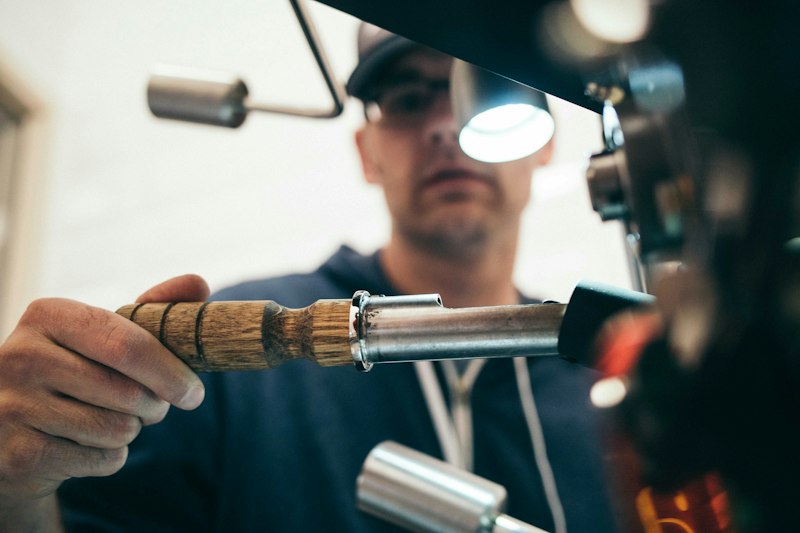
The Formula 1 paddock — one of the most exclusive environments in global sport. For decades, it was also one of the most deliberately closed-off.
For forty years, Formula 1 was the personal empire of Bernie Ecclestone.
Ecclestone, a former used-car dealer who became one of the most powerful figures in sport, had built F1 into a global television rights machine through sheer commercial genius. He negotiated broadcast deals in 130 countries. He moved races to new continents. He built Grands Prix in Bahrain, Singapore, Abu Dhabi — markets that paid enormous hosting fees to be associated with the sport. He made F1 extraordinarily profitable in the ways that mattered to him.
But by 2016, cracks were showing everywhere that Ecclestone had refused to look.
Free-to-air TV viewership was declining across Europe — the sport's heartland. F1 had sold its television rights to pay-TV providers, meaning millions of fans who had always watched for free now had to subscribe to a cable package. Many didn't bother. The cumulative TV audience that had peaked at around 600 million viewers around 2008 had fallen significantly.
F1 had no official social media strategy. Teams and drivers were discouraged from sharing footage. Highlights were blocked on YouTube rather than used to build audiences. The sport's social media accounts were essentially inactive compared to other global properties.
And America — the largest advertising market on Earth — was practically unreachable. There was one US race per year (Austin, Texas). It was watched by a fraction of Americans. There was no cultural connection.
The sport was profitable but structurally vulnerable. Its core audience was ageing. Its media model was a decade behind. And it was actively resisting the tools — social media, streaming, behind-the-scenes access — that every other major sports property was using to grow.
This is what an undervalued asset looks like in practice. The underlying product — twenty of the most sophisticated machines ever built, racing on circuits across five continents, with decades of history and global reach — was genuinely world-class. The commercial operation around it was not. That gap between asset quality and execution quality is exactly where opportunity lives.
The Acquisition
What Liberty Media Paid — and What They Actually Bought
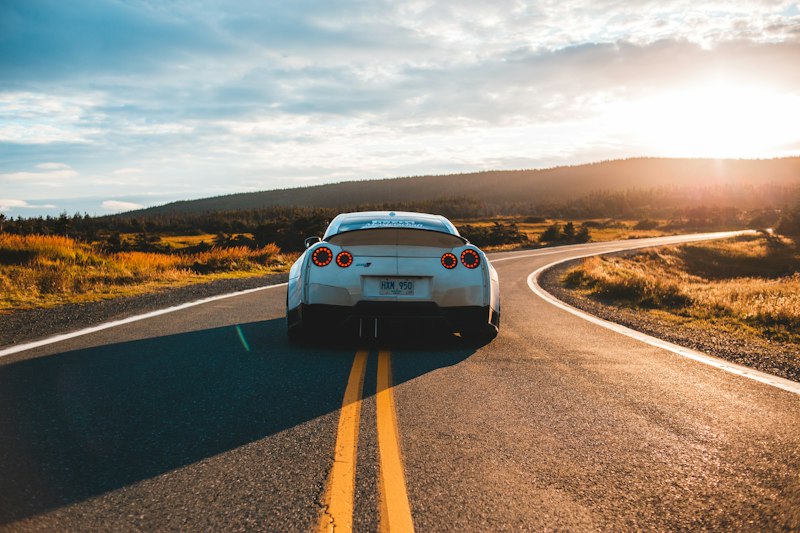
Liberty Media's acquisition team saw Formula 1 not as a racing series, but as a global media franchise — one that happened to use racing cars as its content.
In September 2016, Liberty Media Corporation announced it would acquire the Formula One Group from CVC Capital Partners for a total enterprise value of approximately $8 billion — with roughly $4.4 billion in equity consideration. The deal closed in January 2017. Bernie Ecclestone, then 86, was removed as CEO within weeks.
Liberty Media — owned by billionaire John Malone and best known in America for owning SiriusXM radio and the Atlanta Braves baseball team — was not a racing company. It was a media company. And that is precisely why it saw what others had missed.
Where the traditional sports business world saw a racing series with declining audiences, Liberty saw the raw ingredients of something far more valuable: a global media IP with 20 live events per year, a built-in international footprint spanning 185 countries, and decades of untapped commercial potential.
The comparison they drew was to American sports leagues. The NFL, the NBA, and Major League Baseball had all spent decades systematically monetising their content — broadcast rights, streaming deals, merchandise, behind-the-scenes access, social media — and had generated billions in the process. Formula 1 had the global reach those leagues could only dream of. What it lacked was the commercial execution.
Chase Carey, who became F1's CEO after the deal closed, was explicit about the strategy: open the sport up. Build the audience. Bring in new races, new markets, new revenue streams. And above all — let people in behind the curtain.
The F1 acquisition is a masterclass in one of the most powerful investment principles: identifying an asset where the intrinsic value is significantly higher than the current price — not because the asset is bad, but because the management of it is. The cars were extraordinary. The history was legendary. The audience was global. Only the execution was broken. When you find that gap, and you have the skills to close it, you have found something real.
The Netflix Effect
Drive to Survive — The Documentary That Rewrote the Rules
Formula 1 gave Netflix cameras access that would have been unthinkable under the old regime — inside the garages, on the pitwall, in the driver briefings. The result changed everything.
In March 2019, Netflix released the first series of Drive to Survive — a documentary series with unprecedented access inside the Formula 1 paddock. It became one of the most important commercial catalysts in modern Formula 1 history.
The concept was simple. Give cameras access to the teams, the drivers, the team principals. Show the arguments, the politics, the money, the pressure. Make Formula 1 feel human.
What nobody anticipated was the scale of the audience it would create.
Drive to Survive did not just convert existing motorsport fans. It accelerated the creation of a new audience — younger, more diverse, and from markets where F1 had little previous presence. Alongside social media growth, new races, renegotiated broadcast deals, and the Verstappen–Hamilton rivalry, it introduced Formula 1 to millions of viewers who had never previously followed the sport. In the United States in particular, people who had never watched a single lap of a Grand Prix began following drivers on social media, buying merchandise, and — critically — attending races.
The numbers that followed were unmistakable. The Miami Grand Prix, a race that did not exist before 2022, sold out immediately and generated enormous economic activity for the city. The 2022 United States Grand Prix in Austin broke attendance records for the venue. And then came Las Vegas — the most commercially significant event in the sport's American history.
Drive to Survive also changed the economics of F1 sponsorship. When companies began realising that a Formula 1 team now reached audiences who had never previously engaged with motorsport — younger, tech-savvy, global — the sponsorship market shifted. Technology companies, financial services firms, and consumer brands that would never have considered F1 began writing significant cheques.
The New Economics
Revenue, the Budget Cap, and Why F1 Teams Are Now Investment Assets
The cost cap transformed F1 teams from passion projects into investable businesses. For the first time, an investor could model an F1 team's costs with confidence.
The commercial transformation of Formula 1 is captured in two numbers.
In 2017 — Liberty Media's first full year running the sport — Formula 1's annual revenue was approximately $1.8 billion. By 2023, it had reached $3.2 billion. A 78% increase in six years, driven by new race hosting fees, record sponsorship values, renegotiated broadcast deals, and the creation of entirely new revenue streams.
But the revenue growth is only half the story. The other half is what Liberty Media did to the cost structure of the teams — and why that single change transformed Formula 1 from a sport where teams bled money into a sport that institutional investors now compete to enter.
In 2021, Formula 1 introduced its cost cap — a limit on how much teams could spend per season on operations (excluding driver salaries, engine costs and senior management pay). The initial cap was set at $145 million for 2021, reducing to $140 million in 2022 and $135 million by 2023. For the first time in the sport's history, a team's spending was predictable and bounded.
Before the cap, the top teams — Mercedes, Ferrari, Red Bull — spent upwards of $400–500 million per season. The smaller teams simply could not compete. The result was a sport that was commercially exciting but economically unsustainable for most participants.
After the cap, everything changed. An investor modelling an F1 team could finally say: the maximum cost exposure is capped. The prize fund from the Concorde Agreement provides a guaranteed baseline of revenue. The brand value — access to what Formula 1 estimates as a global fanbase of roughly 750 million people, across 23 races per year on five continents — is substantial and growing.
Leading F1 teams are now valued in the multi-billions of dollars. As of 2025, Ferrari is estimated at $6.4 billion, Mercedes at $5.9 billion, McLaren at $4.7 billion, and Red Bull at $4.3 billion. That would have seemed absurd a decade ago, when multiple teams experienced financial distress or entered administration during the pre-cost-cap era. The same assets that were being sold at a fraction of that value are now institutional investment targets.
American investors have taken notice. Significant stakes in multiple F1 teams are now held by US private equity and institutional capital — a profound shift from the sport's traditionally European ownership base.
The F1 cost cap is a lesson in how structural rules change valuations. Before the cap, F1 teams were money pits with uncertain cost exposure — hard to value, hard to invest in. Liberty Media, the FIA and the teams collectively introduced reforms that substantially improved the sport's cost structure. After the cap, teams became investable businesses with bounded costs and growing revenues. In any industry you look at, ask the same question: are the structural rules changing in a way that makes previously uninvestable assets suddenly attractive?
The Championship
What Verstappen vs Hamilton Did for the Business of Formula 1
Sport needs stars. And in 2021, Formula 1 had its greatest moment in a generation.
Lewis Hamilton — the British driver who had equalled Michael Schumacher's record of seven World Championships — was battling Max Verstappen of Red Bull for the 2021 title. It went to the final lap, of the final race, of the entire season — in Abu Dhabi.
The finish was extraordinary and controversial in equal measure. Verstappen won the championship on the last lap after a disputed safety car restart. Millions of first-time viewers — brought to the sport by Drive to Survive — watched it live. The footage was shared across social media millions of times. Formula 1 trended globally.
It could not have been scripted better if Liberty Media had tried. Verstappen went on to win four consecutive World Championships — 2021, 2022, 2023 and 2024 — dominating the sport in a way that had not been seen since Schumacher's era. But it was that 2021 finale that crystallised Formula 1's cultural moment: the sport had found a new generation of fans, and it had given them something to remember.
American investors have moved decisively into Formula 1 team ownership. Dorilton Capital owns Williams Racing. Cadillac F1 (the GM/Andretti-backed team) joined the grid as the 11th team for the 2026 season. Arctos Partners has taken a stake in Alpine. The sport that America barely knew exists is now a target for US institutional capital — following the audience, which the money always does eventually.
Formula 1's global broadcast rights are among the most valuable in sport. In the UK, Sky Sports holds exclusive live rights and pays hundreds of millions per year for them. In the US, ESPN renewed its F1 deal in 2022. The shift from free-to-air to premium pay-TV has cost F1 some casual viewers — but the revenue per viewer has risen dramatically. This is the same trade-off the NFL made with Sunday Ticket. Short-term audience cost. Long-term revenue gain.
Formula 1 invested roughly $500 million in land, facilities and infrastructure associated with the Las Vegas Grand Prix — the circuit itself uses 3.8 miles of public roads through the casino district, with F1 building the permanent paddock facility and retaining commercial rights to the event. Organisers and local officials estimated the 2023 race generated approximately $1.2 billion in economic activity for Las Vegas. It is the clearest example yet of F1 thinking like an entertainment company rather than a racing series.
Formula 1 is now in active discussions about races in Africa, Southeast Asia, and a second race in the Middle East. Every new race added to the calendar is a new eight- or nine-figure hosting fee, a new local broadcaster deal, and a new market of fans. The calendar — which stood at 21 races in 2022 and grew to 23 in 2023 — is the primary commercial product. The racing is the content that makes people watch it.
The Lesson
Formula 1 became a $20 billion entertainment empire not because the cars got faster or the engineering got better. It became one because a media company from Colorado looked at the same asset the rest of the world was watching decline — and saw something completely different.
They saw a global media franchise that had never been properly unlocked. They bought it. They opened it up. They put cameras inside it. They took it to new markets. They fixed the cost structure. And within six years, they had created one of the most valuable sports properties on Earth.
The opportunity is gone for Formula 1. But the principle it illustrates is timeless: the gap between an asset's current price and its true potential is where wealth has always been built. The people who spotted that gap early — whether in F1 team stakes, in Liberty Media stock, or simply in understanding that Drive to Survive was a signal worth acting on — made extraordinary returns.
The next Formula 1 is out there somewhere. Undervalued, mismanaged, with a world-class product underneath a broken business model. NOXEN will be watching for it.
See you next week,
— The NOXEN Team
Test Yourself
How much did you take in?
Two levels of ten. Elementary checks you read it. Advanced checks you understood it.