You're reading NOXEN — the intelligence newsletter for the next generation of wealth, power and ambition. Every week we decode what's really moving the world. No jargon. No noise. Just the intelligence that matters.
The Kingdom That's Buying the World
Saudi Aramco made $161.1 billion in net profit in a single year — more than any single publicly listed company in the world that year. Here is what the Kingdom is doing with it, and what it means for the next thirty years of global power.
In 2022, Saudi Aramco posted a net profit of $161.1 billion.
Let that number sit for a moment. Apple — widely considered the most profitable consumer company on Earth — made nearly $100 billion that year. Google made approximately $60 billion. Microsoft made approximately $73 billion. Each of them, individually, made less than two-thirds of what Aramco made. No single publicly listed company on Earth came close to Aramco's profit in 2022.
It was widely reported as the largest annual profit ever recorded by a publicly listed company. And behind that number sits a transformation story that will define global power for the next generation — a kingdom sitting on decades of oil wealth, using it to buy its way into the future before the oil runs out.
This is what that looks like. And what it means.
The Engine
Saudi Aramco — One of the Most Structurally Advantaged Businesses Ever Built
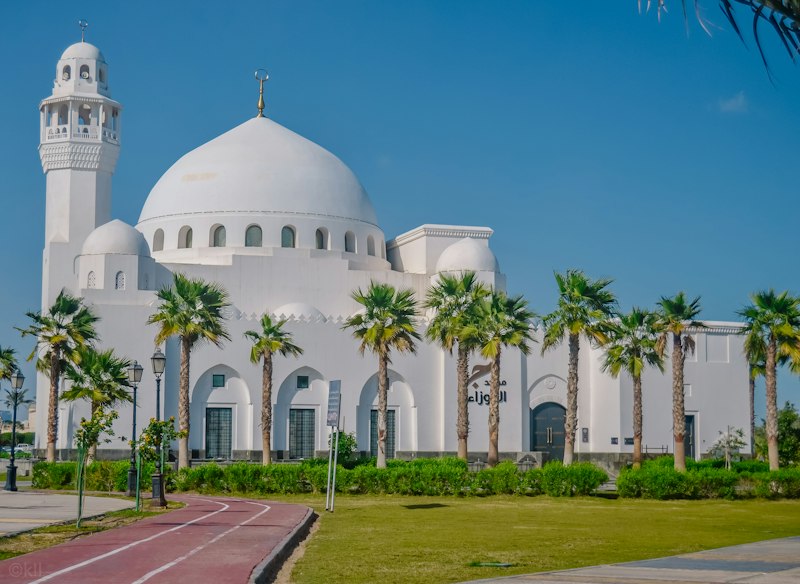
Aramco's scale is genuinely incomprehensible. It is not just the largest company in Saudi Arabia — its profits in a single year exceed the annual GDP of many nations.
Saudi Aramco was founded in 1933 as a joint venture with American oil companies. It was nationalised by Saudi Arabia across the 1970s and 1980s, and transformed over the following decades into the single most powerful commercial entity in the history of oil extraction.
The numbers are staggering in every direction. Aramco holds one of the world's largest proven conventional oil reserve bases of any single company — a resource that required almost no exploration cost to acquire, since the oil was already there, discovered beneath the Saudi desert and largely developed by the mid-twentieth century. The cost to produce a barrel of Saudi crude is among the lowest on Earth: Aramco has repeatedly disclosed production costs of well under $10 per barrel, compared to $20–40 per barrel for deep-water or shale producers in other countries.
When oil prices rose sharply in 2022 following Russia's invasion of Ukraine — Brent crude averaged over $100 per barrel for much of the year — the result was the profit figure above. When you sell at $100 what costs you less than $10 to produce, at a volume of millions of barrels per day, the arithmetic becomes extraordinary.
In December 2019, Saudi Arabia did something it had resisted for decades: it listed a small portion of Aramco on the Saudi stock exchange. The IPO initially raised $25.6 billion and later reached approximately $29.4 billion after additional share sales — making it the largest IPO in history, surpassing Alibaba's 2014 record. At the IPO price, Aramco was valued at approximately $1.7 trillion, briefly making it the most valuable publicly traded company in the world. The Saudi government retained over 98% of the shares. The IPO formed part of a broader strategy to strengthen the Public Investment Fund and finance Vision 2030 initiatives.
The IPO was not primarily about raising capital. Saudi Arabia is not short of capital. It was about something else entirely: credibility, transparency, and a clear signal to global markets that the Kingdom was ready to operate on the world stage by international financial standards. The money was the side effect. The message was the point.
Aramco's competitive moat is among the most durable in business history. Its production costs are structurally lower than virtually every rival on Earth. Its reserve base required no exploration risk to develop. Its infrastructure is decades old and largely depreciated. When oil prices rise, Aramco captures the gains almost entirely as profit. When oil prices fall, its cost structure means it remains profitable when others don't. It is arguably one of the most structurally advantaged businesses in the world, benefiting from vast low-cost reserves and state ownership — and it is entirely controlled by one government.
The Plan
Vision 2030 — Reducing Saudi Arabia's Dependence on Oil
Vision 2030 is not an economic policy document. It is an attempt to rebuild an entire national economy before its primary revenue source becomes obsolete.
On 25 April 2016, Deputy Crown Prince Mohammed bin Salman — known globally as MBS — stood before the world's media and unveiled Vision 2030.
He was 30 years old. He had recently become the most powerful figure in the Kingdom after his father, King Salman, ascended to the throne in 2015. And the plan he announced was, in both ambition and scale, unlike anything a Gulf state had attempted before.
The problem Vision 2030 was designed to solve was simple to understand and enormously difficult to fix. Saudi Arabia's government revenue was overwhelmingly dependent on oil — a commodity that is finite in supply and, over a multi-decade horizon, faces the structural risk of declining demand as the world transitions toward cleaner energy. A country that earns the majority of its wealth from one commodity, extracted from the ground, is a country with a structural vulnerability that no amount of present prosperity can paper over permanently.
Vision 2030 was MBS's answer: use the window of oil wealth to diversify the economy before the oil era ends. Grow non-oil government revenues dramatically. Expand the private sector's contribution to GDP. Build an entertainment industry from nothing. Create world-class tourism infrastructure. Attract tens of millions of international visitors annually. Develop domestic technology and manufacturing industries. Build new cities.
The targets were sweeping. Some were met ahead of schedule. Others were revised. But what nobody disputes is the financial commitment behind the plan — and the speed at which that capital has been deployed.
The Machine
The Public Investment Fund — $900 Billion in Patient Capital
At the centre of Saudi Arabia's transformation sits the Public Investment Fund — the Kingdom's sovereign wealth fund, universally known as the PIF.
The PIF is not new. It was established in 1971. But for most of its existence it was a relatively modest domestic investment vehicle with limited ambition. What transformed it was a decision made in 2015 and 2016, when Mohammed bin Salman became its chairman and redirected it toward an entirely different mandate: become one of the most consequential investment institutions on Earth.
MBS appointed Yasir Al-Rumayyan as the PIF's Governor — the man tasked with executing the strategy on the ground. Aramco's IPO proceeds flowed directly into the fund. Oil revenues were channelled to it. And the mandate was explicit: invest aggressively, globally, across every sector, to generate returns that would fund Saudi Arabia's post-oil future.
The PIF manages assets valued at approximately $1.21 trillion as of year-end 2025, according to PIF's own annual results released in July 2026. The target established under Vision 2030 has been raised to $2.67 trillion by 2030 — after PIF exceeded its 2025 milestone ahead of schedule. If achieved, it would place the PIF alongside the largest sovereign wealth funds on Earth.
| Sovereign Wealth Fund | Country | Est. AUM |
|---|---|---|
| Norway Government Pension Fund Global | Norway | ~$2T+ |
| Kuwait Investment Authority | Kuwait | ~$1T est. |
| Abu Dhabi Investment Authority (ADIA) | UAE | ~$1.1T est. |
| Public Investment Fund (PIF) | Saudi Arabia | ~$1.21T (target $2.67T) |
| GIC | Singapore | ~$936B est. |
The PIF's investment portfolio spans technology, real estate, entertainment, infrastructure, sport, and manufacturing. It took a controlling stake in Lucid Motors — the American electric vehicle manufacturer — owning approximately 57% of the company, effectively betting that EV technology was part of the post-oil future it was building toward. It invested in major gaming companies, global entertainment groups, and hospitality businesses. It seeded domestic Saudi industries — in tourism, entertainment, and technology — that had not meaningfully existed before.
The PIF is one of the most consequential investors on Earth — not because it has the highest returns, but because it operates with an almost unlimited time horizon, politically directed mandate, and capital that carries none of the quarterly reporting pressure of a pension fund or the redemption risk of a hedge fund. When the PIF invests in a sector, it does not need to exit in three years. That patience alone changes the investment calculus entirely. Understanding where sovereign wealth funds are directing capital is one of the most powerful macro signals available to any investor who pays attention.
The Strategy
Sport as Soft Power — How Saudi Arabia Is Buying Cultural Legitimacy

Saudi Arabia's sports investments are not passion projects. They are a coordinated strategy to build global brand recognition, attract international visitors, and reposition the Kingdom as a destination rather than merely a supplier.
In October 2021, a PIF-led consortium completed the purchase of Newcastle United Football Club for £305 million, acquiring an 80% controlling stake in one of English football's most historic clubs. Yasir Al-Rumayyan, the PIF Governor, became chairman of the club.
The purchase was controversial from the start. Critics — with legitimate arguments — pointed to Saudi Arabia's human rights record and questioned whether state-linked funds should control a Premier League club. The debate was real and continues. But what the debate did not do was stop what followed.
In June 2022, the PIF launched LIV Golf — a breakaway professional golf tour offering prize money and appearance fees the traditional PGA Tour could not match. Phil Mickelson, the most decorated American golfer of his generation, became one of the most prominent early signatories, reportedly for a package reported in the hundreds of millions of dollars. Dozens of other top players followed. The PGA Tour, which had initially fought LIV aggressively and suspended members who joined, later entered discussions with the PIF through a framework agreement in June 2023, reflecting the significant influence LIV Golf had gained in professional golf.
In January 2023, Cristiano Ronaldo — the most-followed person on Instagram, with over 600 million followers — signed for Al Nassr of the Saudi Pro League. The financial terms were not officially confirmed, but multiple major outlets reported an annual package exceeding $200 million, making it one of the largest athlete contracts in sports history. Ronaldo's move brought unprecedented global attention to Saudi football and the Kingdom itself.
The summer of 2023 confirmed that Ronaldo was the opening act, not the headline. Karim Benzema, the reigning Ballon d'Or winner, signed for Al Ittihad. Neymar — the most expensive footballer in history at the time of his 2017 transfer to PSG — signed for Al Hilal. N'Golo Kanté, Roberto Firmino, Riyad Mahrez, Jordan Henderson. The Saudi Pro League's clubs spent over $900 million in transfer fees in a single summer transfer window — a figure that placed them among the top spending leagues in world football, behind only the Premier League.
The investments appear to serve multiple objectives simultaneously: tourism growth, international visibility, domestic entertainment development, economic diversification, sporting success, and soft power. Saudi leaders have been explicit about many of these goals. Taken together, the sports strategy is best understood as a coordinated effort to build global awareness of the Kingdom, attract visitors, and signal modernisation — objectives that no single advertising campaign could achieve at comparable scale.
Building the Future
NEOM and The Line — The Cities That Have Never Existed Before
NEOM is the most ambitious urban development project ever announced. Whether visionary or unrealistic — or both simultaneously — it has no precedent in the modern world.
In the northwest corner of Saudi Arabia, in the Tabuk region on the Red Sea coast, construction is underway on one of the most ambitious urban development projects ever proposed — though timelines and scope have been revised since the original announcement.
NEOM is a planned new economic zone — announced by MBS in October 2017 with a projected budget of over $500 billion. It is not a suburb or an expansion of an existing city. It is a new region being built on land that currently contains almost nothing: a 26,500 square kilometre area of mountains, desert and Red Sea coastline — roughly the size of Rwanda, or Albania.
The most discussed project within NEOM is The Line — originally announced as a city for up to 9 million residents within a structure 170 kilometres long, 200 metres wide, and 500 metres tall. Subsequent reports suggest construction may proceed in phases and at a smaller initial scale than first envisioned. No roads. No cars. No carbon emissions, according to the designers. Two vast mirrored glass facades stretching across the desert, visible from space, powered entirely by renewable energy. Residents would travel from one end to the other in 20 minutes via a high-speed rail system running through the interior.
There is no city that looks like this anywhere on Earth. Engineers and urban planners have raised legitimate questions about its feasibility at the scale announced. Whether The Line is built in full, built in part, or evolves significantly in design and scope — what it represents is clear: a government willing to attempt things that no government has ever attempted, because it has both the capital and the political will to try.
NEOM is worth paying attention to not because it will definitely work as announced, but because of what it signals about the ambition and time horizon behind it. Saudi Arabia is not trying to marginally improve what already exists. It is attempting to build infrastructure that has never existed — because it believes the post-oil future requires something fundamentally new, not something incrementally better. That orientation — accepting that the future requires impossible-feeling investment today — is the same thinking behind every major technological and economic leap in history. Whether NEOM delivers fully or not, the intent and capital behind it are both real.
The World Stage
2034 — The FIFA World Cup and the Culmination of a Decade
FIFA formally confirmed Saudi Arabia as host of the 2034 FIFA World Cup in late 2024, after it emerged as the sole bidder for that edition of the tournament.
It will be the first World Cup held on the Arabian Peninsula since Qatar hosted the tournament in 2022. Like Qatar, Saudi Arabia will need to build significant infrastructure — new stadiums, expanded transport networks, hotels, new city capacity — at enormous cost. Plans include a stadium within NEOM itself.
The parallels with Qatar are instructive. Qatar spent an estimated $200 billion preparing for the 2022 tournament — constructing eight new stadiums, a complete metro system, new roads, tens of thousands of hotel rooms, and an entirely new city (Lusail) from the ground up in the desert. The scale of investment was unprecedented in the history of the World Cup. Saudi Arabia's resources, its existing tourism infrastructure head start, and its stated ambitions are all larger than Qatar's at a comparable point in preparation.
For Saudi Arabia, the 2034 World Cup is not simply a sporting event. It is the culmination of everything Vision 2030 has been building toward: the moment when the Kingdom hosts one of the most-watched sporting events in the world, in facilities it built, in front of an audience of billions, in a country that is trying to show the world it has changed.
The PIF holds positions across a remarkable breadth of global assets — from Lucid Motors (~60% stake) to significant positions across the global gaming sector through stakes in several major publishers and gaming-related businesses, as well as global real estate and infrastructure. It is not a fund seeking pure financial alpha through stock selection. It is a fund seeking strategic presence in sectors Saudi Arabia wants to understand, develop, or eventually replicate domestically. The investment is the education.
Saudi Arabia's transformation strategy contains an inherent tension: the Kingdom needs high oil prices to fund Vision 2030, but high oil prices accelerate the world's shift away from oil — which is the very thing Saudi Arabia is trying to prepare for. This is not a flaw in the logic. It is the urgency behind it: use the window of high oil revenues to build the assets, institutions and infrastructure needed when those revenues eventually decline. The timescale is debated. The direction of travel is not.
Saudi Arabia is not acting alone. The six Gulf Cooperation Council states collectively operate sovereign wealth funds managing an estimated $3 trillion or more in assets — including Abu Dhabi's ADIA, Kuwait's KIA, Qatar's QIA, and the UAE's Mubadala. Together they represent one of the most concentrated pools of long-term patient capital on Earth. When these funds move into a sector — whether artificial intelligence infrastructure, sport, real estate, or clean energy — the scale of capital they can deploy reshapes entire industries. Tracking Gulf capital flows is one of the most powerful macro signals available to any informed investor.
Saudi Arabia set a Vision 2030 target of attracting 150 million visitors annually by 2030. The Kingdom crossed 100 million visitors in 2023 — a milestone that would have been almost unimaginable at the start of the decade, when Saudi Arabia barely had a functioning international tourist visa programme. Entertainment venues, cultural sites, Red Sea resorts, Formula 1 hosting, and major sporting events are all part of an infrastructure that barely existed ten years ago. The pace of tourism development has been unusually rapid by international standards.
What It Means
The story of Saudi Arabia's transformation is not, at its core, a story about oil. It is a story about what happens when a government with enormous capital, a clear strategic threat on the horizon, and a genuine willingness to act at historic scale decides to reinvent itself — and does so with a speed and breadth that most institutions, public or private, could not replicate.
The Aramco profit figure — $161.1 billion in a single year — is staggering in isolation. But it is what Saudi Arabia is choosing to do with that money that will determine whether this era is remembered as one of the great national transformation stories in history, or as an extraordinary spending programme that failed to build something durable.
The investments are real. The stadiums are being built. The footballers are in Riyadh. The golf tour upended a century of tradition. The linear city is under construction. The World Cup is coming. The question of whether the broader economy actually transforms — whether Saudi Arabia can build industries, institutions, and private sector capability that generate wealth independently of oil — is one that will take a generation to answer honestly.
There is a parallel story that this article has not dwelled on, but that any serious analysis must acknowledge. Saudi Arabia's transformation is inseparable from questions of human rights, political centralisation, and governance risk. The same concentrated authority that allows Vision 2030 to move at extraordinary speed also means there are no checks on how it moves. Migrant labour conditions, press freedom, the treatment of political dissidents, and the rights of women and minorities remain serious and legitimate concerns raised by international organisations and governments. These are not peripheral to the economic story — they are part of it. Investors, businesses, and institutions engaging with Saudi Arabia are making a judgement that the opportunity justifies the association. That is a judgement each reader must make for themselves.
What is not in question is the intent, the capital, and the speed. Saudi Arabia is buying the world's attention. Whether it can hold it — and build something permanent and broadly beneficial behind it — is the most consequential economic transformation story of the next thirty years.
See you next week,
— The NOXEN Team
Test Yourself
How much did you take in?
Two levels of ten. Elementary checks you read it. Advanced checks you understood it.